Axis Nifty500 Low Volatility 50 Index Fund

banner-image

Axis Nifty500 Low Volatility 50 Index Fund

Ride the market. Skip the mood swings. India's top 50 low volatile stocks, in one index fund: Axis Nifty500 Low Volatility 50 Index Fund - a rules-based index fund investing in 50 Nifty 500 stocks with relatively lower historical price volatility, for a comparatively steadier path through equity markets.

Do You Know?

Rs. 1 lakh invested in Nifty500 Low Volatility 50 TRI, in Mar 2005 would have grown to Rs 31.33 lakh as of Jul 2026 amid lesser risk compared to Nifty 500 TRI.*

Wealth Growth Chart - Rs 1 lakh to Rs 31.33 lakh

Past performance may or may not be sustained in the future. For performance of Index refer below table.

What is Low Volatility Investing?

Same broad equity destination, a smoother route. Low volatility investing is a rules-based, factor strategy that picks stocks with relatively lower historical price fluctuation from the eligible universe. This passive, low-cost approach aims to smooth out sharp market swings while keeping you invested in India's long-term growth story.^

Low Volatility Investing

Low Volatility Investing is like a smoother ride that helps you reach the destination comfortably.

Why consider a low-volatility strategy?

Low volatility strategy tends to offer cushion during market corrections. A low-volatility strategy, in some past periods, has shown relatively smaller drawdowns than the broader market during market corrections.i

Low Volatility Strategy - Drawdown Comparison Chart

Low Volatility investing aims to reduce the impact of market turbulence by focusing on relatively stable companies.

Historically, low volatility strategy has offered relatively 20-30% lesser drawdowns compared to broader market during major crisis period.i

Past performance may or may not be sustained in the future.

This pattern is drawn from index history and may not repeat in future market cycles.

Understanding the risk-return trade-off

Conventional wisdom links higher risk with higher potential return. Index history for the low-volatility factor in Indian equities shows periods where a lower-volatility basket has delivered comparable long-term returns to the broader market with relatively smaller drawdowns.

Risk-Return Trade-off Chart

Historical resilience during downturnsii

Companies with historically steadier prices during past downturns have, in some periods, recovered relatively sooner once markets stabilised.

Historical Resilience During Downturns - Recovery Chart

Past performance may or may not be sustained in the future.

A disciplined, steady approach

As in the fable of the hare and the tortoise, a disciplined, lower-volatility approach has, in some historical periods, compounded steadily rather than relying on short-term outperformance.

Hare and Tortoise - Disciplined Approach Illustration

In investing, winning slow and steady can help more over the long term than sprinting – and stumbling.

Who Should Consider This Fund?

Who Should Consider This Fund?

Key features

icon

Better Downside Protection

icon

Diversified Core Holding

icon

Outperformance, With Lower Risk

icon

Rules-Based & Transparent

icon

Wealth Creation

icon

SIP Performance

icon

True to Label Index

icon

Backed by Axis AMC

Potentially Higher Returns, Lower Volatilityiv

The Nifty500 Low Volatility 50 TRI has outperformed both broad-based benchmarks across time periods – while taking on lower risk (annualised volatility).

Index Performance Comparison Table

Past performance may or may not be sustained in the future.

Index Lumpsum Performance*

Rs. 1 lakh invested in Nifty500 Low Volatility 50 TRI, in Mar 2005 would have grown to Rs 31.33 lakhs as of Jul 2026 amid lesser risk compared to Nifty 500 TRI.

Index Lumpsum Performance Chart

*Past performance may or may not be sustained in the future.

Index: SIP Performancev

Index SIP Performance Chart

A monthly SIP of ₹10,000 in the Nifty500 Low Volatilty 50 TRI would have grown to approximately ₹1.41 crore over the last 20 years, highlighting the power of long term disciplined investing in India's top 50 Low Volatility stocks.

Past performance may or may not be sustained in the future.

How the 50 Stocks Are Chosenvii

  • Universe: Constituents of the Nifty 500 Index.
  • Eligibility: Stocks scoring low on liquidity are excluded.
  • Screening: A 'Low Volatility Score' = inverse of the standard deviation of the previous 1-year price returns (log-normal).
  • Selection & Weighting: Top 50 by score, weighted by Low Volatility Score and free-float market cap; single-stock cap at the lower of 5% or 5x its free float – Market cap weight.
  • Rebalancing: Semi-annual - in June and December.

Top 10 Stocksiii

Top 10 Stocks Chart

The Nifty500 Low Volatility 50 Index holds a diversified top 10 led by names like TCS, SBI, Sun Pharma, Bharti Airtel, NTPC, and Ultratech Cement with no single stock dominating the portfolio. The top 10 constituents account for roughly 45% of index weight, giving the Fund a balanced, large-cap-led core.

Top Sectorsiii

Top Sectors Chart

The Nifty500 Low Volatility 50 Index is well spread across stable sectors, led by Healthcare, Consumer Discretionary, Financial Services, Commodities, Energy & many more. This sector diversification helps the Fund avoid concentration risk and support a smoother, low-volatility equity experience.

Why Axis AMC?

Trusted Mutual Fund Brand

Trusted Mutual Fund Brand

Axis AMC is one of India's leading asset management companies, with an overall AUM exceeding ₹4 lakh crore and over 1 crore active investor accounts, reflecting strong investor trust, brand recognition and a robust investment management platform.vi

Dedicated Passive Investing Expertise

Dedicated Passive Investing Expertise

A focused and experienced leadership team dedicated to passive investing, index funds and ETF solutions, committed to delivering efficient, rules-based investment strategies for long-term wealth creation.

Research-Led Investment Insights

Research-Led Investment Insights

Continuous market research, data-driven insights and investment analytics help identify emerging trends, sector opportunities and evolving themes across the Indian capital markets.

Comprehensive Range of Passive Funds

Comprehensive Range of Passive Funds

Access a diversified suite of around 39 passive investment products across equity index funds, debt index funds, ETFs and commodity-based investment solutions, catering to a wide range of investor needs.vi

Deep Indexing & Market Expertise

Deep Indexing & Market Expertise

Research initiatives are led by professionals with over 15 years of experience across domestic and international index providers, including NSE, BSE and S&P Dow Jones Indices, bringing deep expertise in index investing, benchmark construction and passive fund management.vi

Built for India's Growing Passive Investment Opportunity

Built for India's Growing Passive Investment Opportunity

With a strong passive investing ecosystem, research-backed capabilities and a growing range of index-based solutions, Axis AMC enables investors to participate in India's long-term economic growth through low-cost, transparent and diversified investment options.

Regulatory Info

Axis Nifty500 Low Volatility 50 Index Fund

(An Open-Ended scheme replicating/tracking Nifty500 Low Volatility 50 Index)

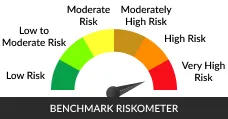
Benchmark: Nifty500 Low Volatility 50 TRI

  • Long term wealth creation solution
  • An index fund that invests in constituents of Nifty500 Low Volatility 50 TRI and aims to achieve returns ofthe stated total return index, subject to tracking error.
*Investors should consult their financial advisers if in doubt about whether the product is suitable for them.

(The risk-o-meter assigned during the New Fund Offer is based on internal assessment of the Scheme Characteristics or model portfolio and the same may vary post NFO when actual investments are made)

Investors are advised to refer to the Statement of Additional Information (SAI) for details of the Axis MutualFund, Standard Risk Factors, Special Considerations, Tax and Legal issues and other general informationon www.axismf.com

riskometer
riskometer

Fund Manager

Mr. Nandik Malik
Mr. Rohit Gautam

Documents

Schemes pdf
Schemes pdf
Schemes pdf
Schemes pdf

FAQs

What is the Axis Nifty500 Low Volatility 50 Index Fund?
up arrow

An open-ended index fund that tracks the Nifty500 Low Volatility 50 TRI by investing in the same 50 stocks in similar proportions, subject to tracking error. These are the 50 least-volatile, most stable stocks in the Nifty 500.

When does the Axis Nifty500 Low Volatility 50 Index Fund NFO open and close?
arrow

What is the minimum investment in the Axis Nifty500 Low Volatility 50 Index Fund?
arrow

What is low volatility investing in the Nifty500 Low Volatility 50 Index?
arrow

Does lower volatility mean lower returns?
arrow

How much did the Nifty500 Low Volatility 50 Index fall in a crash?
arrow

How is the Axis Nifty500 Low Volatility 50 Index Fund different from a Nifty 50 or Nifty 500 index fund?
arrow

Is the Axis Nifty500 Low Volatility 50 Index Fund good for SIP?
arrow

Is the Axis Nifty500 Low Volatility 50 Index Fund only a large-cap fund?
arrow

Which stocks and sectors does the Nifty500 Low Volatility 50 Index hold?
arrow

How often is the Nifty500 Low Volatility 50 Index rebalanced?
arrow

How can I use the Axis Nifty500 Low Volatility 50 Index Fund in my portfolio?
arrow

What is the expense ratio (BER/TER) of the Axis Nifty500 Low Volatility 50 Index Fund?
arrow

What is tracking error in the Axis Nifty500 Low Volatility 50 Index Fund?
arrow

Is there an exit load on the Axis Nifty500 Low Volatility 50 Index Fund?
arrow

How is the Axis Nifty500 Low Volatility 50 Index Fund different from an ETF?
arrow

Who manages the Axis Nifty500 Low Volatility 50 Index Fund?
arrow

Is the Axis Nifty500 Low Volatility 50 Index Fund risky?
arrow

How are the 50 stocks in the Nifty500 Low Volatility 50 Index selected?
arrow

How is volatility measured in this index?
arrow

How concentrated is the Nifty500 Low Volatility 50 Index?
arrow

What is the sector allocation of the Nifty500 Low Volatility 50 Index?
arrow

Is the Nifty500 Low Volatility 50 Index actually less volatile?
arrow

What would a ₹10,000 monthly SIP in the Nifty500 Low Volatility 50 Index have grown to?
arrow

What is the Axis Nifty500 Low Volatility 50 Index Fund?

An open-ended index fund that tracks the Nifty500 Low Volatility 50 TRI by investing in the same 50 stocks in similar proportions, subject to tracking error. These are the 50 least-volatile, most stable stocks in the Nifty 500.

When does the Axis Nifty500 Low Volatility 50 Index Fund NFO open and close?

The NFO is open from 9 September 2026 (Wednesday) to 22 September 2026 (Tuesday).

What is the minimum investment in the Axis Nifty500 Low Volatility 50 Index Fund?

Just ₹100, and in multiples of ₹1 thereafter- for both SIP and Lumpsum, during the NFO and on an ongoing basis.

What is low volatility investing in the Nifty500 Low Volatility 50 Index?

A factor-based strategy that deliberately buys stocks with smaller, calmer price movements. Historically, such stocks have offered smaller drawdowns in crises and competitive long-term returns- the “low volatility anomaly.”

Does lower volatility mean lower returns?
Not historically. Over 1Y to 20Y periods, the Nifty500 Low Volatility 50 TRI has outperformed both the Nifty 50 TRI and Nifty 500 TRI- while taking on lower risk. Past performance may or may not be sustained in future.iv
How much did the Nifty500 Low Volatility 50 Index fall in a crash?
Historically ~20–30% less than the broad market. During the Global Financial Crisis the strategy fell ~48% versus ~63% for the Nifty 500 TRI, and during Covid-19 it fell ~29% versus ~37%.i
How is the Axis Nifty500 Low Volatility 50 Index Fund different from a Nifty 50 or Nifty 500 index fund?

A Nifty 50/500 index fund weights stocks purely by market cap. This fund applies a low-volatility filter and weighting, tilting towards potentially stable, relatively less-jittery companies for a smoother ride and better downside protection.

Is the Axis Nifty500 Low Volatility 50 Index Fund good for SIP?

Yes. A low-volatility index has historically shown steadier, more consistent rolling returns – well suited to disciplined monthly SIP investing.

Is the Axis Nifty500 Low Volatility 50 Index Fund only a large-cap fund?
No. It is predominantly large-cap (~80%) with a meaningful mid-cap (~18%) and a small small-cap (~1%) allocation – a balanced, diversified profile.iii
Which stocks and sectors does the Nifty500 Low Volatility 50 Index hold?
A diversified mix led by TCS, SBI, Sun Pharma, Bharti Airtel, NTPC, Maruti Suzuki, Power Grid, UltraTech Cement, Bajaj Auto and Apollo Hospitals, spread across healthcare, autos, financials, utilities and more (as of 31-Jul-2026).iii
How often is the Nifty500 Low Volatility 50 Index rebalanced?
Semi-annually, in June and December, as per NSE Indices’ methodology. The fund realigns its portfolio accordingly.vii
How can I use the Axis Nifty500 Low Volatility 50 Index Fund in my portfolio?

As a stable core. It may pair well with a a strategy that may behave very differently from Low Volatility strategy across market cycles.

What is the expense ratio (BER/TER) of the Axis Nifty500 Low Volatility 50 Index Fund?

As an index fund it aims to keep costs low. The exact BER/ TER will be announced by the AMC post re-opening of the Scheme and is subject to change within SEBI limits- please check the Axis Mutual Fund website at the time of investing.

What is tracking error in the Axis Nifty500 Low Volatility 50 Index Fund?

It measures how closely the fund’s returns follow the benchmark, after expenses, cash holdings and rebalancing. A lower tracking error means more closer index replication.

Is there an exit load on the Axis Nifty500 Low Volatility 50 Index Fund?

Yes – 0.25% if redeemed or switched out within 15 days of allotment; Nil thereafter.

How is the Axis Nifty500 Low Volatility 50 Index Fund different from an ETF?

This is anopen-ended index fund, bought and redeemed at day-end NAV, and it supports SIPs – with no demat or trading account required.

Who manages the Axis Nifty500 Low Volatility 50 Index Fund?

The scheme is managed by Mr. Nandik Malik and Mr. Rohit Gautam.

Is the Axis Nifty500 Low Volatility 50 Index Fund risky?

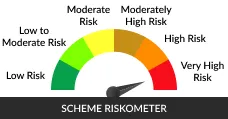
All equity investing carry market risk, and the scheme riskometer is ‘Very High’.

How are the 50 stocks in the Nifty500 Low Volatility 50 Index selected?
Stocks are picked from the Nifty 500 universe and scored on low volatility, calculated as the inverse of standard deviation of the previous 1-year price returns (log normal); the 50 highest-scoring stocks are included and weighted by that score rather than by market cap.vii
How is volatility measured in this index?
By a stock's daily price standard deviation over a 12-month period.vii
How concentrated is the Nifty500 Low Volatility 50 Index?
The top 10 stocks account for ~45% of index weight, with the largest single holding at 5.4%.iii
What is the sector allocation of the Nifty500 Low Volatility 50 Index?
Led by Healthcare (~21.8%), Consumer Discretionary (~18.2%) and Financial Services (~13.3%), with Utilities ~11.2%, IT ~8.8%, FMCG ~8.1%, Commodities ~7.0%, Energy ~6.9% and Telecom ~4.8%.iii
Is the Nifty500 Low Volatility 50 Index actually less volatile?
Yes; 20-year annualised volatility of 15.6% versus 20.4% for the Nifty 50 TRI and 19.9% for the Nifty 500 TRI, with lower volatility across every period from 1 to 20 years.iv

Past performance may or may not be sustained in the future.

What would a ₹10,000 monthly SIP in the Nifty500 Low Volatility 50 Index have grown to?
A 20-year SIP of ₹24,00,000 invested would be worth ~₹1,41,19,611 (15.5% XIRR), against ~₹1,04,05,942 (13.0% XIRR) for the Nifty 500 TRIv

Past performance may or may not be sustained in the future. Refer table above for returns

Disclaimer

*Performance is calculated using Total Return Index (TRI), with zero cost / expenses and tracking difference / error. Source: Nifty indices. Date: 31-Jul-2026; Past performance may or may not be sustained in the future. The above information should not be construed as promise, guarantee or forecast of returns. Table / Charts mentioned above are used to explain the concept and is for illustration purpose only. Rebased to 1000 both as of 31-Mar-2005.

^Price variation measured in terms of stocks daily price standard deviations over 12-month period.

iSource: Nifty Indices. Date: 31-Jul-2026; Past performance may or may not be sustained in the future. The above information should not be construed as promise, guarantee or forecast of returns. Table / Charts mentioned above are used to explain the concept and is for illustration purpose only.

iiRecovery period is defined as 12 months from the bottom of the correction. Source: Nifty Indices. Date: 31-Jul-2026; Past performance may or may not be sustained in the future.

iiiSource: https://www.niftyindices.com/indices/equity/strategy-indices/nifty500-low--volatility-50 Date: 11-Aug-2026. The Stocks/Sectors mentioned herein are for general assessment purpose only and not a complete disclosure of every material fact. It should not be construed as investment advice to any party. The stocks are constituents of Nifty500 Low Volatility 50 Index.

ivSource: https://www.niftyindices.com/indices/equity/strategy-indices/nifty500-low--volatility-50. Date: 31-Jul-2026; Past performance may or may not be sustained in the future.

vSource: Nifty Indices Data as 31-Jul-2026, for SIP returns, monthly investment of INR 10,000 invested on the first business day of every month has been considered. Performance is calculated using Total Return Index (TRI), with zero cost / expenses and tracking difference / error. Past Performance may or may not be sustained in future.

viDate: 31-Jul-2026. https://www.axismf.com

viiSource: https://www.niftyindices.com/indices/equity/strategy-indices/nifty500-low--volatility-50 Date: 31-Jul-2026.

Axis Bank Ltd. is not liable or responsible for any loss or shortfall resulting from the operation of the scheme.

Mutual Fund Investments are subject to market risks, read all scheme related documents carefully.