
Axis Nifty India Defence Index Fund


Overview
Investment Objective
To provide returns before expenses that correspond to the performance of Nifty India Defence TRI subject to tracking error. There is no assurance that the investment objective of the scheme will be achieved.
Entry Load, Exit Load & Tax
| If redeemed / switched-out within 15 Days | |
| From the date of allotment | 0.25% |
| If redeemed/switched out after 15 Days | |
| From the date of allotment | Nil |
Minimum Investment Amount
Underlying Index Details
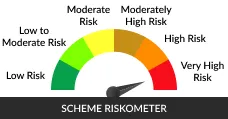
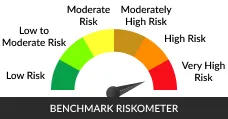
This product is suitable for investors who are seeking*
- To provide returns before expenses that correspond to the performance of Nifty India Defence TRI subject to tracking error. There is no assurance that the investment objective of the scheme will be achieved.
Fund Manager


Fund Quants

Tracking Difference
| Fund Names | 1 Year | 3 Year | 5 Year | 10 Year | Since Inception |
|---|---|---|---|---|---|
| Axis Nifty India Defence Index Fund | N/A | N/A | N/A | N/A | -0.57 |
Tracking Error
Disclaimer : Tracking Error and Tracking Difference data powered by ICRA Analytics (Disclaimer - https://www.icraanalytics.com/terms-of-use/disclaimer)
Outlook
Similar Funds


Documents
Presentation

Leaflet
SID
KIM
Frequently asked questions
You can invest in Axis Nifty India Defence Index Fund through multiple convenient channels:
● Online platforms such as the Axis Mutual Fund website or mobile app
● Registered mutual fund platforms and fintech apps
● Through a distributor or financial advisor
● Directly via your Demat or trading account, if the fund is available on your platform
Investments can be made either as a lump sum or through a Systematic Investment Plan (SIP), depending on your financial goals and investment horizon.
The Axis Nifty India Defence Index Fund, aims to replicate the performance of Nifty India Defence TRI. It invests in constituents of Nifty India Defence Index, that includes companies classified as Aerospace & Defence, Explosives, and Ship Building & Allied Services, by AMFI.
Sources: NSE Indices Methodology - Nifty India Defence TRI eligibility and weighting (Mar 2026)
The Axis Nifty India Defence Index Fund offers exposure to India's fast growing Defence stocks, as it replicates Nifty India Defence TRI by investing the basket of defence stocks listed in India without active stock selection as defined in Index Methodology.
Defence stocks in India are gaining traction due to rising government spending, Aatmanirbhar Bharat initiatives, increasing exports, and strong order book visibility across companies.
Aatmanirbhar Bharat promotes domestic manufacturing of defence equipment, reduces import dependence, and encourages participation of Indian companies, leading to higher value capture within the country.
The key drivers include government spending, export growth, indigenisation, private sector participation, and evolving warfare technologies like drones, advanced radars and missile systems.
Sources: PIB - Make in India powers defence growth (29 Mar 2025)
Since 2022, globally defence spending is on the rise. It is expected to further go up on account of Middel East war. The growing demand for defence equipment and military modernisation can create a long-duration revenue visibility for companies.
Sources: SIPRI - World military expenditure reached US$2.718 tn in 2024 (Apr 2025)
Drones are increasingly used for surveillance, reconnaissance, and precision strikes. They offer cost advantages and scalability, making them a critical part of modern defence strategies.
India is aggressively promoting drone manufacturing through the PLI (Production Linked Incentive) scheme for drones, iDEX (Innovations for Defence Excellence) challenges, and increased military procurement. Private companies are emerging as key players in the indigenous drone ecosystem — creating investable opportunities within the defence sector stocks universe.
The Tejas Light Combat Aircraft represents India's indigenous aerospace capability, reducing reliance on imports and building a domestic ecosystem of high-end defence manufacturing.
Sources: PIB - 83 Tejas Mk1A contract (~Rs 48,000 crore) (03 Feb 2021)
India's missile programs, including BrahMos and Akash, enhance strategic autonomy and create export opportunities in a growing global market for missile systems. Recent global conflicts, including the wars in Ukraine, and the Middle East, have fundamentally demonstrated that missiles & drones are central to modern warfare.
Artillery and ammunition manufacturing is critical for national security, battlefield dominance, and strategic autonomy, serving as the backbone of conventional warfare. The ability to produce artillery systems and ammunition allows nations to sustain long-term military engagements, maintain deterrence, and avoid dependence on foreign suppliers.
India's defence exports are rising due to strong policy support for indigenous manufacturing, increased private sector participation, and growing global acceptance of Indian defence products. The government's active export push and rising global defence spending are further supporting export-led growth.
Sources: PIB - Defence exports all-time high in FY 2024-25 (01 Apr 2025) | PIB - Make in India powers defence growth (29 Mar 2025)
India's defence exports are witnessing a structural and sustained uptrend, driven by domestic manufacturing scale up, supportive policy reforms, and rising global defence demand.
Key drivers, supported by data:
- Defence exports have hit record highs by FY25, rising sharply from FY17 onwards, indicating increasing global acceptance of Indian defence platforms and equipment
Source: Ministry of Defence, PIB
👉 https://pib.gov.in - Private sector participation has emerged as a key growth engine, with private companies accounting for a growing share of defence exports, reflecting improved competitiveness, execution capability, and product quality
Source: Ministry of Defence, PIB
👉 https://pib.gov.in - India's defence production has scaled up steadily over recent years, creating exportable surplus beyond domestic requirements and strengthening India's position as a reliable defence supplier
Source: Press Information Bureau (PIB), Ministry of Defence
👉 https://pib.gov.in - Policy reforms have structurally enabled exports, including:
o Up to 74% FDI under the automatic route
o Greater private sector participation
o Government led defence export promotion initiatives
Source: Ministry of Defence
👉 https://www.mod.gov.in - This export growth is further supported by a global defence spending upcycle, with global military expenditure estimated at ~USD 2.7 trillion in 2025, expanding the addressable market for Indian defence manufacturers
Source: SIPRI, IISS
👉 https://www.sipri.org
👉 https://www.iiss.org
Naval shipbuilding acts as a cornerstone of the defence ecosystem by fostering advanced manufacturing, technological innovation, and self-reliance, with each unit of investment in shipbuilding generating significant employment (up to 6.4 times) in ancillary industries. In India, it is driving a transformation from a 'buyer to a builder' nation, with 75% of defence acquisitions reserved for local vendors and over 60 naval vessels currently under construction
The Nifty India Defence Index is a thematic index designed to track companies engaged in defence manufacturing and services. It includes stocks from the Nifty Total Market Index that derive at least 10% of revenues from the defence segment and are weighted by free-float market capitalization.
Investing in a defence index fund provides instant diversification across top defence companies, reducing the high risk of picking individual stocks. These funds offer low-cost, passive exposure to the growing, long-term government-backed sector, ideal for investing in India's 'Make in India' initiatives with better risk management.
Government spending, particularly capital expenditure, acts as the primary growth driver for defence companies by funding modernization, accelerating, and prioritizing domestic procurement over imports. Increased allocation fuels revenue growth, while 75% reservation for domestic players boosts local manufacturing and technological capability.
Sources: PIB - FY 2025-26 defence budget; domestic earmarking and capital acquisition (01 Feb 2025)
Private sector participation improves efficiency, innovation, and margins, while expanding the overall defence manufacturing ecosystem.
Ongoing geopolitical tensions and conflicts are increasing defence budgets globally, leading to sustained demand for defence equipment and technologies.
Sources: SIPRI - Trends in World Military Expenditure 2024 (Apr 2025)
Yes, defence manufacturing drives infrastructure development, job creation, R&D, and industrial expansion, contributing to broader economic growth.
The sector is witnessing a rare convergence of global demand, domestic policy support, and export growth, making it a compelling structural opportunity.
- Defence spending is rising globally amid heightened geopolitical tensions and a shift to a multipolar world.
- India's defence budget and domestic production have shown a consistent long-term uptrend.
Sources: PIB - Defence in Union Budget 2026-27 (03 Feb 2026) | PIB - Defence exports all-time high in FY 2024-25 (01 Apr 2025) - Strong order books and export momentum support earnings visibility for defence companies.
- The index fund offers a transparent, rules-based way to gain diversified exposure to the defence theme.
- Recent market corrections, offers attractive valuation multiple advantage
The minimum investment amount in the Axis Nifty India Defence Index Fund is ?100.
Sources: Axis MF NFO page (accessed Mar 2026; scheme-related documents to be read carefully)
- During the New Fund Offer (NFO): ₹100 and in multiples of ₹1 thereafter
- On an ongoing basis (post NFO): ₹100 and in multiples of ₹1 thereafter
This makes the fund accessible to first time as well as long term investors.
The Axis Nifty India Defence Index Fund is a passive fund that tracks the Nifty India Defence TRI, investing in the same stocks and weights as the index. It follows a transparent, rule based approach with no active stock selection.
Sources: Axis MF - What are Index Funds? passive approach overview (accessed Mar 2026) | NSE Indices Factsheet - Nifty India Defence Total Returns Index (27 Feb 2026)
In contrast, an active defence fund relies on the fund manager's discretion to select stocks and time the market, which may lead to periods of outperformance or underperformance.
The Nifty India Defence Index comprises leading Indian companies engaged in defence manufacturing, aerospace, shipbuilding, electronics, missiles, and allied services.
Key constituents include (as per index composition):
- Bharat Electronics Ltd. (BEL)
- Bharat Forge Ltd.
- Hindustan Aeronautics Ltd. (HAL)
- Solar Industries India Ltd.
- Mazagon Dock Shipbuilders Ltd.
- Cochin Shipyard Ltd.
- Bharat Dynamics Ltd.
- Data Patterns (India) Ltd.
- Astra Microwave Products Ltd.
- MTAR Technologies Ltd.
These companies together form the core of India's defence and aerospace ecosystem represented in the index.
Sources: NSE Indices Factsheet - Top constituents by weightage (27 Feb 2026)
Defence is a long-term structural theme supported by sustained government spending, self-reliance initiatives, and global demand. However, the sector may experience short- to medium-term volatility and is suitable for investors with a long-term investment horizon.
The Axis Nifty India Defence Index Fund is treated as an equity oriented mutual fund for taxation purposes. Accordingly, the following tax rules apply:
- Short Term Capital Gains (STCG):
If units are redeemed within 12 months, gains are taxed at 20%. - Long Term Capital Gains (LTCG):
If units are redeemed after 12 months, gains above ?1.25 lakh in a financial year are taxed at 12.5%.
Sources: Income Tax Dept - STCG on equity-oriented funds under section 111A at 20% post 23 Jul 2024 (updated page accessed Mar 2026) | Income Tax Dept - Section 112A amended to LTCG 12.5% above Rs 1.25 lakh (Finance Act 2024)
Yes, Non Resident Indians (NRIs) can invest in the Axis Nifty India Defence Index Fund, subject to applicable regulatory guidelines and documentation requirements.
NRIs can invest on a repatriation or non repatriation basis, through:
- NRE / NRO bank accounts, and
- Investments routed via normal banking channels as permitted by RBI and SEBI regulations.
NRIs from certain countries (such as the USA and Canada) may be subject to additional documentation or restrictions, as specified in the Scheme Information Document (SID). Investors are advised to check the latest eligibility criteria before investing.
Sources: Axis MF NFO page - scheme documents / investor disclosures (accessed Mar 2026)
The Nifty India Defence Index Fund offers thematic, sector focused exposure to defence and allied companies, enabling investors to participate in India's long term defence growth story, though with higher volatility. In contrast, the Nifty 50 Index Fund provides broad, diversified exposure to India's largest companies across sectors and typically shows lower volatility. As a result, the defence index fund suits investors seeking targeted thematic exposure, while the Nifty 50 works better as a core large cap equity allocation.
Sources: NSE Indices Factsheet - thematic index concentration and top constituents (27 Feb 2026)
The Nifty India Defence Index Fund carries higher risk due to sector concentration, as it invests only in defence and allied companies and is sensitive to government policies, defence budgets, and regulatory decisions. Being a thematic, passive index fund, it can be more volatile in the short term, cannot reduce exposure during high valuations, and may face liquidity and stock concentration risks due to a limited number of constituents.
Sources: NSE Indices Factsheet - 18 constituents and top weight concentrations (27 Feb 2026) | NSE Indices Methodology - semi-annual rebalancing and capped weights (Mar 2026)
As a result, the fund is best suited for investors with a long term investment horizon and higher risk appetite, and is ideally used as a satellite allocation within a diversified portfolio.
The Nifty India Defence Index Fund is suitable for long term investors who seek focused exposure to India's defence and indigenisation theme, are comfortable with higher volatility, and prefer a passive, rules based investment approach. Given its sector focused nature, the fund works best as a satellite allocation within a diversified portfolio for investors who understand the associated risks and have a long term view on the defence sector.
Sources: Axis MF - What are Index Funds? (accessed Mar 2026) | NSE Indices Factsheet - thematic concentration / return profile context (27 Feb 2026)


Invest Now