Axis Nifty50 Equal Weight Index Fund


Overview
Investment Objective
To provide returns before expenses that correspond to the performance of Nifty50 Equal Weight TRI subject to tracking error. There is no assurance that the investment objective of the scheme will be achieved.
Entry Load, Exit Load & Tax
| If redeemed / switched-out within 15 Days | |
| From the date of allotment | 0.25% |
| If redeemed/switched out after 15 Days | |
| From the date of allotment | Nil |
Minimum Investment Amount
Underlying Index Details
This product is suitable for investors who are seeking*
- To provide returns before expenses that correspond to the performance of Nifty50 Equal Weight TRI subject to tracking error.
- There is no assurance that the investment objective of the scheme will be achieved.*
Fund Manager


Fund Quants

Tracking Difference
| Fund Names | 1 Year | 3 Year | 5 Year | 10 Year | Since Inception |
|---|---|---|---|---|---|
| Axis Nifty50 Equal Weight Index Fund | N/A | N/A | N/A | N/A | -0.15 |
Tracking Error
Disclaimer : Tracking Error and Tracking Difference data powered by ICRA Analytics (Disclaimer - https://www.icraanalytics.com/terms-of-use/disclaimer)
Outlook
Similar Funds


Documents
Presentation

Leaflet
SID
KIM
Frequently asked questions
It is an open-ended scheme that aims to track the Nifty50 Equal Weight TRI, subject to tracking error. The fund seeks to invest in the same 50 companies as the Nifty 50 Index, with approximately equal constituent representation at index review.
In a regular Nifty 50 index fund, each stock's weight is determined by its market capitalisation - so the largest companies like HDFC Bank (10.9%) dominate the portfolio. The top 10 stocks alone account for 54.4% of the total weight, while the bottom 10 hold just 6.4% as on May 29, 2026. In an equal weight approach, every stock gets the same 2% allocation. This means the top 10 hold only 20% and the bottom 10 also hold 20%. The result is a more diversified exposure where all 50 companies participate meaningfully.
The minimum investment is ₹100 - both for lump sum and SIP - during the NFO period as well as on an ongoing basis. Additional investments can be made in multiples of ₹1 thereafter. This low entry point makes the fund accessible to a wide range of investors, from first-time investors to experienced allocators.
If you redeem your units within 15 days from the date of allotment, an exit load of 0.25% is applicable. If you redeem after 15 days, the exit load is Nil. Practically, this means you can exit with zero additional cost after just two weeks, making it an investor-friendly exit load structure within the passive fund category.
Every quarter - in March, June, September, and December - the Nifty50 Equal Weight Index resets all 50 stock weights back to their equal ~2% allocation. If a stock has rallied to 3%, it is trimmed back to 2%. If a stock has declined to 1.5%, it is topped up to 2%. This creates an automatic buy-low, sell-high mechanism without any emotional decision-making. Over time, this quarterly discipline enforces a contrarian approach by systematically trimming high-momentum stocks and accumulating those that have lagged.
This fund may be suitable for: first-time equity investors seeking simple, diversified large-cap exposure; existing Nifty 50 investors who want to reduce concentration; long-term SIP investors looking for a rule-based approach; and investors seeking sector-balanced portfolios who do not want over-dependence on any single sector. The fund is designed for investors with a long-term horizon who understand equity investments carry market risk.
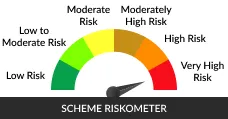
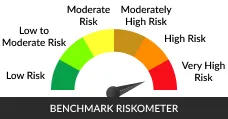
The fund is subject to market risk - values can go up or down. It is classified as "Very High" risk on the SEBI Riskometer. There will be tracking error inherent to all index funds. The Equal Weight approach may underperform during narrow rallies where only top heavyweights drive the market. Quarterly rebalancing also results in higher portfolio turnover compared to a standard Nifty 50 fund.
Historically, the Nifty50 Equal Weight Index has delivered higher SIP returns. A ₹10,000 monthly SIP over 10 years generated an XIRR of 15.1% vs 11.6% for Nifty 50 Index - resulting in ₹26,39,571 compared to ₹21,93,481 as on May 29, 2026. That's ₹4,46,090 higher historically from the same monthly contribution. The quarterly rebalancing mechanism aligns with the SIP approach by continually redistributing exposure across all 50 companies. Past performance may or may not be sustained in the future
(Note: https://www.niftyindices.com/ Data as on May 29, 2026. Past performance may or may not be sustained in the future)
The Equal Weight category has grown from ₹104.5 Crore in FY 2019-20 to ₹9,822.9 Crore in FY 2025-26 - a 94x growth in 6 years as on Mar 30, 2026. The Nifty50 Equal Weight strategy alone accounts for ~₹6,900 Crore. Globally, equal weight strategies have gained traction in US and European markets, and India is following this trend.
While other AMCs also offer Nifty50 Equal Weight Index Funds, the Axis Fund is backed by Axis AMC's ₹3,50,000+ Crore AUM, 1 Crore+ active investor accounts, and a dedicated passive fund leadership team with 15+ years of experience. Axis AMC currently offers 38 passive fund options across equity, debt, and commodities. The fund also starts at just ₹100.
Yes. The minimum SIP amount is ₹100, making it one of the lowest SIP entry points in the equal weight category. This makes the Axis Nifty50 Equal Weight Index Fund accessible to students, early-career professionals, and anyone who wants to start small and build wealth systematically over time.
Not significantly. The 5-year annualized volatility of the Nifty50 Equal Weight is 13.9% versus 13.7% for Nifty 50 - a difference of just 0.2% as on May 29, 2026. Both indices hold the same 50 large-cap companies; the only difference is how much weight each stock gets. The Equal Weight approach may experience slightly higher short-term volatility during narrow market rallies.
In regular Nifty 50, Financial Services dominates at 35.5%. In the Equal Weight approach, this drops to 20.9%. Sectors that benefit from equal weighting include: Consumer Discretionary (10.2% → 18.8%), Commodities (7.3% → 13.8%), Healthcare (5.5% → 9.9%), FMCG (5.0% → 8.1%). This gives investors a more balanced exposure to India's economy.
Note: Data as on May 29, 2026. https://www.niftyindices.com/ The stocks and sectors are part of Nifty50 Equal Weight TRI.
You don't necessarily need to switch entirely. Many investors use an Equal Weight fund alongside their existing Nifty 50 fund to reduce overall concentration. If your current Nifty 50 fund has 54.4% in just 10 stocks, adding an Equal Weight allocation brings your combined portfolio closer to broader diversification. Consider your investment horizon, risk appetite, and overall portfolio composition before deciding. Also consult your financial advisor before investing.
During broad market corrections, both Nifty 50 and Nifty 50 Equal Weight will decline - equity investments carry inherent market risk. However, the Equal Weight approach's lower concentration means your portfolio isn't disproportionately impacted by a sharp fall in one or two heavyweight stocks or sectors. Additionally, quarterly rebalancing automatically increases allocation to stocks that have fallen - a systematic approach to participating in recoveries.
Tracking error is the small difference between the fund's returns and the underlying benchmark Index returns. It occurs due to fund expenses, cash holdings, transaction costs, and the timing of rebalancing. All index funds have some tracking error - it is not unique to this fund. Axis AMC's dedicated passive fund team aims to keep tracking error as low as possible.
As an equity-oriented fund (100% large-cap equity), standard equity mutual fund taxation applies. Short-Term Capital Gains (STCG): If you redeem within 1 year, gains are taxed at 20%. Long-Term Capital Gains (LTCG): If you redeem after 1 year, gains above ₹1.25 Lakh in a financial year are taxed at 12.5%. _Tax rates are as per prevailing tax laws and are subject to change.
You can invest in the Axis Nifty50 Equal Weight Index Fund online through the Axis Mutual Fund website, the Axis MF mobile app, or through registered distribution platforms such as MF Central, MFU, and various third-party investment apps. You can also invest via your bank, financial advisor, or RIA. KYC compliance is required before investment. Both lump sum and SIP modes are available, starting from just ₹100, in either the Regular Plan or Direct Plan
Yes, Non-Resident Indians (NRIs) can invest in the Axis Nifty50 Equal Weight Index Fund on a repatriable or non-repatriable basis, subject to FEMA regulations and applicable tax rules. NRIs need an NRE or NRO bank account in India and must complete the KYC process with valid documents (passport, overseas address proof, PAN, etc.). NRIs from the USA and Canada may have additional restrictions due to FATCA compliance - please refer to the Scheme Information Document (SID) for the latest applicable rules.
Both are large-cap focused index funds but track very different indices. The Nifty50 Equal Weight Index Fund invests in the same Nifty 50 blue-chip companies with equal ~2% weight each. The Nifty Next 50 Index Fund invests in the 50 stocks ranked 51 to 100 by market cap - companies that are emerging large caps but are not yet in the Nifty 50. Equal Weight gives you balanced exposure to the established top 50, while Nifty Next 50 gives you exposure to the next layer of growing large caps. They serve different portfolio purposes.
The fund is designed for investors with a long-term horizon (ideally 5+ years) and is positioned for goals such as retirement planning, children's education, and long-term wealth building. Historically, the index has shown higher CAGR than the Nifty 50 across 5Y, 7Y, 10Y, 15Y, and 20Y periods, with comparable volatility. The rule-based methodology, quarterly rebalancing, and ₹100 minimum investment make it accessible for systematic, long-term goal-based investing. Past performance may or may not be sustained in the future.
The Total Return Index (TRI) captures both price appreciation and dividend reinvestment - giving a complete picture of an index's actual returns. SEBI has mandated all mutual funds to benchmark performance against the TRI version of their respective indices for transparency and accurate comparison. The Axis Nifty50 Equal Weight Index Fund benchmarks against the Nifty50 Equal Weight - TRI, ensuring investors and the fund manager are measured on a complete-return basis. This makes performance comparisons fair, accurate, and aligned with regulatory standards.
No. Equal weight investing does not guarantee better returns. It can perform differently from the regular Nifty 50 depending on market breadth, sector leadership, rebalancing impact, costs and tracking error.
Quarterly rebalancing resets constituent weights back toward equal allocation. This may trim stocks whose weights have risen and add to stocks whose weights have fallen, but it can also increase turnover and transaction costs.
Invest Now