
AXIS NIFTY500 VALUE 50 INDEX FUND


Overview
Investment Objective
To provide returns before expenses that correspond to the Nifty500 Value 50 TRI subject to tracking error. There is no assurance that the investment objective of the scheme will be achieved.
Entry Load, Exit Load & Tax
| If redeemed / switched-out within 15 Days | |
| From the date of allotment | 0.25%% |
| If redeemed/switched out after 15 Days | |
| From the date of allotment | Nil |
Minimum Investment Amount
Underlying Index Details
This product is suitable for investors who are seeking*
- Long term wealth creation solution
- An index fund that seeks to track returns by investing in a basket of Nifty500 Value 50 stocks and aims to achieve returns of the stated total return index, subject to tracking error.
Fund Manager


Performance
Returns Calculator
Returns Over The Years

Performance of AXIS NIFTY500 VALUE 50 INDEX FUND - Direct Growth as of October 14, 2026
| NIFTY 500 Value 50 TRI | Current Value of Rs.10,000 Invested | |||||
|---|---|---|---|---|---|---|
| Annualised(%) | Nifty500 Value 50 TRI Benchmark(%) | Nifty 50 TRI Additional Benchmark(%) | Annualised(₹) | Nifty500 Value 50 TRI Benchmark(₹) | Nifty 50 TRI Additional Benchmark(₹) | |
| Since Inception 2024-10-24 | 4.61% | 4.88% | -2.68% | 10,910 | 10,966 | 9,488 |
| 5 Years | - | - | - | - | - | - |
| 3 Years | - | - | - | - | - | - |
| 1 Year | 6.55% | 6.89% | -7.09% | 10,655 | 10,689 | 9,291 |
Fund Quants

Tracking Difference
| Fund Names | 1 Year | 3 Year | 5 Year | 10 Year | Since Inception |
|---|---|---|---|---|---|
| Axis Nifty500 Value 50 Index Fund | -0.32 | N/A | N/A | N/A | -0.27 |
Tracking Error
Disclaimer : Tracking Error and Tracking Difference data powered by ICRA Analytics (Disclaimer - https://www.icraanalytics.com/terms-of-use/disclaimer)
Outlook
Portfolio
Asset Cap Mix
Portfolio Summary
Holdings
| Stocks | % of holdings |
|---|---|
| Grasim Industries Limited | 5.28 |
| Hindalco Industries Limited | 5.2 |
| Coal India Limited | 5.19 |
| Oil & Natural Gas Corporation Limited | 5.08 |
| State Bank of India | 5 |
Similar Funds


Documents
Presentation

Leaflet
SID
KIM
Frequently asked questions
Investors have the flexibility to start their investments via an SIP
Yes, investors have the flexibility to switch their investments with Axis Mutual Fund. Investors should check their tax liabilities before making a switch transaction.
Axis Nifty500 Value50 Index Fund invests in a pure value based strategy. The fund mimics the performance of the Nifty500 Value50 TRI in a bid to match the benchmarks performance subject to tracking error. This is a pure play passive investment strategy, with a focus on discovering undervalued stocks, with the potential to perform to their full potential, in the long term.
STCG, for investments held for a period below 12 months are taxed at 20%. LTCG, for investments held for a period beyond 12 months are taxed at 12.5% on gains over 1.25 lacs.
This fund will be rebalanced semi-annually, closely tracking the Nifty500 Value50 TRI.
Investors can invest in Axis Nifty500 Value50 Index Fund via Axis Mutual Funds website CLOUDFRONT_BASE_URL or the A Mutual Fund Mobile App, as well as official points of acceptance. Investors need to be KYC compliant to invest & can invest within just 1 minute.Note: Sector(s)/ Stock(s) mentioned above are for the purpose of disclosure of the portfolio of the Scheme(s) and should not be construed as recommendation.For individual nature of tax implications, investors are requested to consult their tax advisors before investing.Total Expense Ratio (TER) is of Axis Nifty500 Value 50 Index Fund Direct Growth Plan as on 29 Aug 2025. The TER of the Scheme is subject to change at the discretion of AMC within the limits specified in Scheme Information Document. Investors are requested to visit Axis Mutual Fund website to view the current TER of the Scheme at the time of investments.Mutual Fund Investments are subject to market risks, read all scheme related documents carefully.
Axis Nifty500 Value50 Index Fund is a low cost solution, with a diversified exposure to Indias top 50 value stocks. Index funds are free from fund manager bias. This scheme aims to invest in stocks with a high growth potential in the long term.
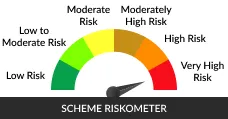
Axis Nifty500 Value50 Index Fund has a riskometer rating of Very High. Different funds have different risks associated to them; investors should check their respective risk appetite before investing.
Axis Nifty500 Value 50 Index Fund is a passive equity index fund, that tracks the Nifty500 Value 50 TRI. This is a unique scheme, wherein, undervalued stocks, with a high growth potential are selected. This is an aggregation of Indias top 50 undervalued companies, with a high potential in the future.
The TER for the Axis Nifty500 Value50 Index Fund Direct Plan Growth Option is 0.18% as on 29 Aug 2025. This is a low cost investing solution, with investors getting access to Indias top 50 value oriented companies, with a TER of just 0.18%.
Axis Nifty500 Value 50 Index Fund invests with a clear objective to create a portfolio of Indias top 50 undervalued companies, who have the potential to grow to their complete potential in the future.
The minimum investment amount for an investment in Axis Nifty500 Value50 Index Fund is just 100 and in multiples of Re. 1/- thereafter. Any investor, whether first time investor or existing mutual fund investor, can start an SIP from just 100, or invest lumpsum from 100. This is a great low-cost investing strategy for investors.
Axis Nifty500 Value50 Index Fund comprised of the 50 best stocks with low P/E, P/B & high dividend yields. It invests in undervalued companies, across sectors & with a high growth potential.
Axis Nifty500 Value 50 Index Fund invests in sectors like Oil, Gas & Consumable Fuels; Financial Services; Metals & Mining; Power; Automobiles & Auto Components & many other similar diversified sectors*.
Axis Nifty500 Value50 Index Fund is a great investment solution for new as well as existing mutual fund investors. This is an ideal solution for investors with a horizon of over 5 years. Value investing traditionally works best in a longer investment horizon.
Axis Nifty500 Value50 Index Fund invests in undervalued stocks, with the potential to gain performance in specific market cycles. This is a great diversification solution for an investors portfolio.


Invest Now