What are Liquid funds & how does it work?


(As on date- 18th Jan, 2021)
Liquid funds are those debt funds which predominantly invest in money market instruments. Liquid funds are open-ended debt mutual funds that invest in debt and fixed income securities that come with a maturity period of up to 91 days.
How do liquid funds work?
The fund manager makes sure that he/she invests in securities that come with a maturity period of up to 3 months or 91 days. That’s because the primary objective of a liquid fund is to provide high liquidity and low risk with reasonable returns. A fund manager only chooses highly rated debt securities and invests in quantum with the scheme’s investment objective.
Here are some of the reasons why liquid funds should be considered for investing:
Ideal for short term goals
Investors can invest in liquid funds to fulfil their short term goals. Every individual has some goals which they wish to achieve through their investments. This is why they are emotionally attached to their investments. An investment in liquid fund can be ideal for meeting life’s short term goals like renovation of the house or making the down payment of a luxury car or for planning a short vacation
Ideal for building an emergency
Anyone who constructs their investment portfolio based on mutual funds should always keep an emergency fund to tackle life’s exigencies. That’s because if your portfolio consists of equity funds, such mutual funds are volatile in nature. One needs to remain invested in such funds for the long run if they want to avoid market volatility over the short term. However, in times of financial emergencies, one needs to have some form of backup and building an emergency fund using liquid funds can be a good idea. Liquid funds are highly liquid in nature. One can redeem their mutual fund units at any given time. They do not have a lock in period. This means that one does not need to remain committed to their investments for any particular time frame. If you do not need the entire amount in your emergency fund to tackle the financial emergency, liquid funds also offer partial withdrawals. Investors can redeem the required number of units and liquidate them into cash while the rest of the investment amount can be continued for investing.
Choose between a direct plan and regular plan
There are two investment plans on offer for anyone seeking investments in liquid funds. Investors can either go with the direct plan or the regular plan depending on their preference. Let us understand the difference between these two. A direct plan is a mutual fund scheme available at the fund house. One can buy a direct plan either by manually visiting the fund house or by logging on to their website online. Because the investor is purchasing the mutual fund scheme directly from the fund house, the expense ratio for owning a liquid fund with a direct plan is low. A regular plan on the other hand is available through a third party like a broker, an aggregator or a fund advisor. One does not need to buy the regular plan directly from the fund house. However, the expense ratio of owning a regular plan is comparatively higher. That’s because the third party selling the liquid fund charges commission fee to the fund house for selling the fund on their behalf. This commission fee is recovered by the fund house by charging a higher expense ratio to the regular plan investor. Thus, investors should be careful while deciding between direct and regular plans.
Axis Liquid Fund is an open ended liquid scheme whose investment objective is to provide a high level of liquidity with reasonable returns commensurating with low risk through a portfolio of money market and debt securities. However, there can be no assurance that the investment objective of the Scheme will be achieved.
Benefits of investing in Axis Liquid Fund
- Axis Liquid Fund invests primarily in money market instruments such as the certificate of deposits (CoD), treasury bills, commercial papers etc.
- Axis Liquid Fund can be considered by someone to park their idle money or a very short term money.
- Axis Liquid Fund is highly liquid in nature and a low risk investment option for investors
- Axis Liquid Fund offers instant redemption 24/7. The instant redemption feature allows you to redeem your money instantly with a simple online request and the money is credited in the account in a few minutes
- Axis Liquid Fund holders can redeem up to 90% of the current value of available units or a maximum of Rs. 50,000 per day, whichever is lower
- Instant redemption facility is available 24/7 for resident Indian individual investors
Now that you know the nature of liquid funds and how they work, plan on investing in them? If you are new to investing and feel that you need further assistance in making an investment decision, do consult a financial advisor.
Axis Liquid Fund
An open ended liquid scheme
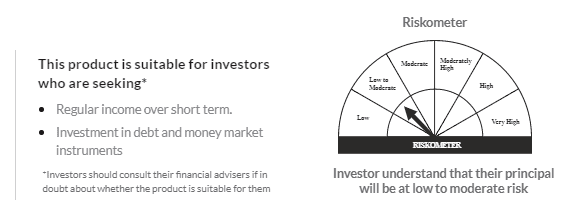
Mutual Fund Investments are subject to market risks, read all scheme related documents carefully.
Calculator
View All