How to Invest in ETFs (Exchange Traded Funds)?


It is essential for investors to make the most out of the multiple investment opportunities available in the market. However, in order to make sure that they invest in the right scheme, investors should be effective at financial planning. We are all emotionally connected to our financial goals, because of which we want to make everything work so that we are able to achieve those goals. Financial planning helps investors prioritize their financial goals, so that they are able to chart out an effective investment plan.
There are several investment schemes to choose from, but every scheme carries a different risk profile. Which is why retail investors are advised to determine their risk appetite. Investors who are completely averse to taking risks with their finances may settle with avenues that offer fixed interest rates that are generally on the lower side. However, if you are someone who is young, seeking investments in market linked schemes and willing to give their investment portfolio a slightly aggressive approach, they can consider investing in mutual funds.
Mutual funds are slowly catching the eye of Indian investors because of several reasons. They carry a diversified portfolio, invest in multiple asset classes, offer active risk management and also hold the potential to offer investors with capital appreciation over the long term. Mutual funds invest in various assets like equity, government bonds, corporate securities, certificate of deposits, treasury bills, etc. Mutual fund investors are referred to as unit holders. A mutual fund investor is allotted mutual fund units in quantum with the investment amount and also depending on the fund’s existing net asset value (NAV). Whether a mutual fund is able to meet its underlying benchmark will totally depend on the performance of its underlying assets and the industries/sectors/economies in which they invest.
What are exchange traded funds?
Mutual funds are further categorized based on their unique attributes like investment objective, investment strategy, asset allocation, etc. This differentiation among mutual funds exists so that investors can diversify their mutual fund portfolio depending on their risk appetite rather than keeping all their eggs in one basket. Some of the major mutual fund categories include equity, debt, hybrid, solution oriented, gold, index and ETFs (exchange traded funds).
Securities and Exchange Board of India (SEBI), the regulator of securities and commodities in India describe exchange traded funds as – “is an open ended scheme which replicates/tracks the particular index. Of the total assets, this fund must invest a minimum of 95 per cent in securities of a particular index (which is being replicated or tracked)”.
To simplify the same, an exchange traded fund (ETF) follows a particular benchmark/index, for example, the NIFTY 100. Unlike actively managed funds. Exchange traded funds do not involve the active participation of the fund manager. On the contrary, unlike an index fund, ETFs are marketable securities which can be bought/sold and traded just like any other company stock throughout the day at an exchange. Another thing that differentiates an ETF from mutual funds is that it does not have net asset value or NAV like mutual funds. Just like an equity share, one unit of an ETF is equivalent to one share of its underlying index.
Requirements for starting ETF investments
There are multiple ways through which you can invest in exchange traded funds. However investors should keep in mind the following things while considering investments in exchange traded funds:
- They need to open a trading account through a broker or through their bank
- They need to open a demat (dematerialization) account for parking their exchange traded fund units.
In order to open a trading and a demat account, an individual has to file a KYC compliant. If they haven’t yet gotten their KYC (Know Your Customer) formality completed, they need to do one time mandatory KYC process.
Once you are through with all the above mandatory onetime formalities, you may start buying/selling ETFs.
Here are three ways an investor can invest in exchange traded funds:
- Investors may either buy/sell ETF units by placing orders on the online through a trading app.
- The second way to buy/sell ETFs is by placing your order by calling your broker and personally informing him about your trade motives. It is mandatory for investors to check if the broker is registered with the SEBI.
- The third and the final way to invest in ETFs is by placing an order via an online trading website.
Now that you are aware about how to invest in ETFs, plan on investing in Axis NIFTY ETF? Axis NIFTY ETF is an open ended Scheme replicating/ tracking Nifty 50 Index. The investment objective of Axis NIFTY ETF is to provide returns before expenses that closely correspond to the total returns of the Nifty 50 Index subject to tracking errors. However, there is no assurance or guarantee that the investment objective of the Scheme will be achieved.
Axis NIFTY ETF
An open ended Scheme replicating/ tracking Nifty 50 Index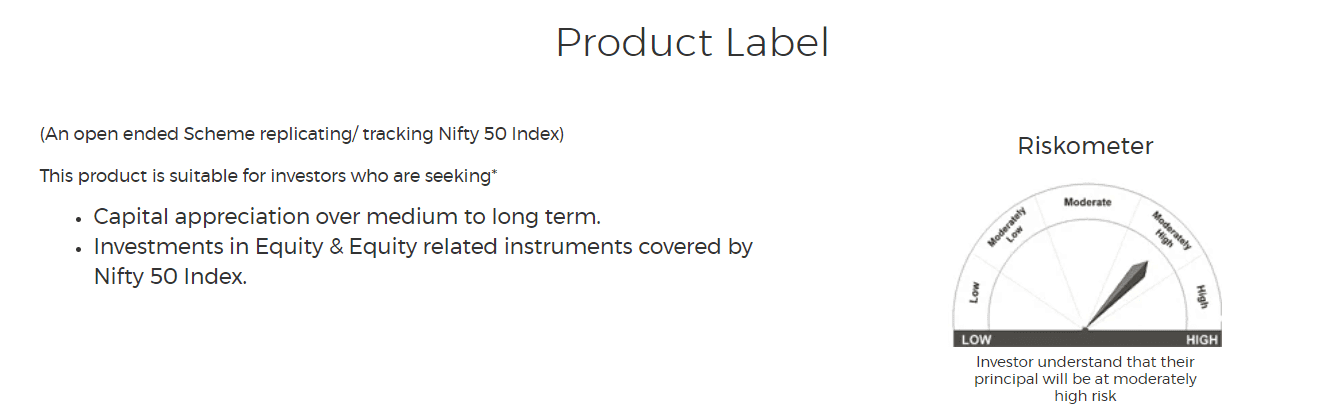
Mutual Fund Investments are subject to market risks, read all scheme related documents carefully.
Calculator
View All