
Axis Multicap Fund


Why Invest in Equity Funds?





Overview
Investment Objective
To generate long term capital appreciation by investing in a diversified portfolio of equity and equity related instruments across market capitalization. However, there is no assurance or guarantee that the investment objective of the Scheme will be achieved.
Entry Load, Exit Load & Tax
| If redeemed / switched-out within 12 months | |
| For 10% of investment | Nil |
| For remaining investment | 1% |
| If redeemed/switched out after 12 months | |
| From the date of allotment | Nil |
Minimum Investment Amount
This product is suitable for investors who are seeking*
- Capital appreciation over long term
- Investment in a portfolio of large, mid and small cap equity and equity related securities.
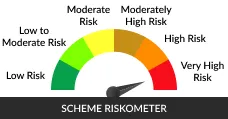
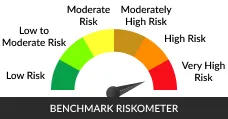
Fund Manager


Performance
Returns Calculator
Returns Over The Years

Performance of Axis Multicap Fund - Direct Growth as of October 14, 2026
| Nifty 500 Multicap 50:25:25 TRI | Current Value of Rs.10,000 Invested | |||||
|---|---|---|---|---|---|---|
| Annualised(%) | Nifty 500 Multicap 50:25:25 Index TRI Benchmark(%) | Nifty 50 TRI Additional Benchmark(%) | Annualised(₹) | Nifty 500 Multicap 50:25:25 Index TRI Benchmark(₹) | Nifty 50 TRI Additional Benchmark(₹) | |
| Since Inception 2021-12-17 | 16% | 11.76% | 7.44% | 20,360 | 17,032 | 14,103 |
| 5 Years | - | - | - | - | - | - |
| 3 Years | 18.71% | 10.95% | 6.05% | 16,743 | 13,664 | 11,931 |
| 1 Year | 9.58% | 0.40% | -7.09% | 10,958 | 10,040 | 9,291 |
Performance of SIP
| SIP Investments | Total Amount Invested | Market Value (As on 2026-09-30) | Returns (Annualised) | Benchmark Returns (Annualised) | Additional Benchmark Returns (Annualised) | Benchmark Market Value | Additional Benchmark Market Value |
|---|---|---|---|---|---|---|---|
| Since Inception 17 Dec 2021 | 5,80,000 | 8,47,226.86 | 15.72% | 10.15% | 4.48% | 7,41,980.40 | 6,47,039.05 |
| 5 Years | 6,00,000 | - | - | - | - | - | - |
| 3 Years | 3,60,000 | 4,21,808.54 | 10.58% | 3.58% | -1.42% | 3,80,175.80 | 3,52,170.74 |
| 1 Year | 1,20,000 | 1,27,349.63 | 11.60% | -2.69% | -13.60% | 1,18,260.41 | 1,11,040.34 |
Fund Quants

Portfolio
Asset Cap Mix
Portfolio Summary
Holdings
| Stocks | % of holdings |
|---|---|
| ICICI Bank Limited | 3.25 |
| HDFC Bank Limited | 2.72 |
| Sona BLW Precision Forgings Limited | 2.53 |
| Eternal Limited | 2.41 |
| Welspun Corp Limited | 2.35 |
IDCW
| Record Date | Option | IDCW (Per Unit) | NAV (Per Unit) | ||
|---|---|---|---|---|---|
| Individuals/HUF | Others | Cum IDCW | Ex- IDCW | ||
| 2026-07-03 | Dividend | 0.97 | 0.97 | 19.92 | 18.95 |
Outlook
Similar Funds


Documents
Presentation

Leaflet
SID
KIM
Others
Frequently asked questions
According to SEBI, multi cap funds are obligated to keep at least 75% of their assets invested in equity and equity-related instruments at all times. Therefore, their portfolios must ensure that at least 25% of their assets are invested in large cap stocks, 25% in mid cap stocks, and 25% in small cap stocks respectively.
Market capitalization, or market cap, is a measurement of a company's size. According to SEBI, all companies that are listed on the stock exchanges are ranked based on their market cap. The top 100 companies are categorised as large cap companies. Companies ranked from 101st-250th as mid cap companies, and those from 251st onwards as small cap companies.
Large cap companies generally have an established track record and tend to be less volatile. Mid cap companies are typically riskier than large caps and are in a growing phase. Small cap companies carry even more risk compared to mid -cap companies and have higher growth potential.
Multi cap funds help to manage risk through diversification. By investing in stocks of companies with varying market capitalizations and sectors, they spread risk across different segments of the market.
A: Multicap funds are managed by experienced fund managers who adjust the portfolio allocation based on prevailing market conditions, aiming for the fund to be positioned for optimal performance.
Multicap funds provide a balanced approach, aiming for stable returns and managed risk by capturing opportunities across the entire market, regardless of company size.
Multi cap funds are suitable for investors with a medium to long-term investment horizon. While short-term fluctuations may occur, the diversified nature of these funds may make them suitable for investors looking to build wealth over time.
Unlike funds that focus on a specific market capitalization, multi cap funds allow investors to invest in all market caps and sectors simultaneously. This provides more comprehensive equity exposure within a single fund. This makes the fund positioned to benefit from changing market cycles where different market segments may potentially outperform at different times.
While returns from multi cap funds can vary based on market conditions, the aim is to make the most of various market segments during different market cycles. It is important to note that multi cap funds come with very high risk and past performance is not indicative of future results.
Investing in multi cap funds offers several advantages. • The first is simplicity and convenience of investing in multiple companies across market capitalization and eliminating the need to choose between large cap, mid cap, and small cap stocks. • Second, these funds can help capitalize on varying market cycles where one market cap may outperform others. • Third, these funds allow access to companies of all sizes – while large caps are predominantly well-established companies with relatively low volatility, small and midcaps come with greater potential to grow albeit at a higher risk. The combination offers a risk-adjusted portfolio that does not compromise growth prospects
Yes, multi cap funds are suitable for first-time investors as they provide an opportunity to have exposure to all market capitalizations—large cap, mid cap, and small cap stocks with professional management. This approach allows new investors to access a broad spectrum of growth opportunities across different segments of the market without the need for extensive market knowledge.
Investing in multi cap funds is simple. You can invest directly through the websites of fund houses or through online platforms offering mutual fund investment services. Additionally, you can approach banks, financial advisors, or mutual fund distributors to help you with the investment process. Before investing, it's essential to research different funds, consider factors such as risk profile, fund performance vis-à-vis benchmark and peers, expense ratios, and investment objectives. Consult with a financial advisor to align your investments with your financial goals.
Multi cap funds attract equity taxation as they invest at least 75% of their assets in equity and related instruments. Each investor is advised to consult his or her own tax consultant with respect to the specific tax implications arising out of his or her participation in the scheme.
Invest Now