
 All Articles
 All Videos
 All Infographics


What are Short Duration Bond Funds and how do they work


The Indian investment market is flooded with an endless number of investment schemes to choose from. If you are good at financial planning, you will not have to worry about navigating through those schemes and choosing the right investment product for you. If you have a defined set of short duration and long term goals, you get a clear idea about which direction to move in. It also gives you a rough idea about how much capital you might need in hand for making the initial investment. Just remember that every investment scheme carries a different risk profile and hence, investors should understand their risk appetite before making an investment. The last thing you want is your portfolio incurring losses because you invested in a scheme that doesn’t align with your risk tolerance.
What are mutual funds?
Mutual funds are nothing but an investment vehicle that invests on behalf of investors sharing a common investment objective in accordance with the scheme’s investment objective. The pool of funds collected from investors is spread across various assets, including equity, debt, government securities, corporate bonds, etc. Mutual fund investors receive mutual fund units in the form of shares. These units are allotted depending on the existing NAV or net asset value of the fund. NAV is nothing but the current market value of the mutual fund minus its liabilities.
Every mutual fund scheme has its own unique investment objective. It is unique in nature and generally doesn’t share similar traits with other mutual fund schemes. However, investors who are entirely new to investing may or may not be able distinguish one mutual fund scheme from another. Which is why SEBI has further categorised mutual funds based on their unique attributes. Mutual funds are further categorized depending on investment objective, risk profile, asset allocation, investment strategy, nature of the scheme, etc.
Here are some of the major mutual fund categories:
- Equity funds
- Debt funds
- Solution oriented funds (retirement fund, children’s fund)
- Hybrid funds
- Index funds
- Exchange Traded Funds
What are debt mutual funds?
Debt funds are those mutual funds that invest in fixed income securities. These funds invest predominantly in debt and debt related instruments. While equity mutual funds predominantly invest in equity and equity related instruments, debt mutual funds invest in debt securities like treasury bills, call money, debentures, government securities, and corporate bonds.
What are short duration bond funds?
There are several mutual fund schemes that come under debt funds. Short duration bond funds are those debt funds that invest in marketable securities like bonds which have a Macaulay duration of anywhere between 1 year to 3 years. These funds invest in fixed income securities like certificate of deposit (CoD), commercial paper etc. Short duration bond funds do not offer fixed interest rates. Capital appreciation through investment in these funds is subject to the performance of the underlying securities in which they invest. Apart from commercial papers and CoDs, short duration bond funds also invest in AAA+ rated companies and government securities.
Things to keep in mind before investing in short duration bond funds
Here are a few things to keep in mind before investing in short duration bond funds:
Investment objective: If you are looking for a fund to help you achieve long term goals like retirement planning or buying your dream home, a short duration bond fund may not work in your favour. Hence, investors are expected to keep their investment objective in mind before making an investment in short duration bond funds. Since these funds invest in securities that mature within 1 to 3 years, short duration bond funds might work in favour of those who have medium or short duration financial goals.
Expense ratio: The expense ratio of the fund may impact the investment value of the short duration bond fund holder at the time of redemption. Hence investors should look out for the fund’s ratio before investing. A higher expense ratio is going to impact the investor’s capital appreciation in future.
Risk appetite: Do not get fooled away by those who claim that equity funds are more risky than bond funds. No fund can be considered riskier than either. Every mutual fund carries a risk profile and investors are expected to make sure that their risk appetite aligns with that of the scheme.
SIP or lumpsum: Short duration bond funds offer two investment options. Investors can either make a lumpsum investment where they will be allotted units in larger quantities, or they can opt for SIP. A Systematic Investment Plan is an easy way to make payments are systematic intervals in short duration bond funds. Investors can invest an amount they are comfortable with and increase the monthly SIP amount gradually. With SIP, they can benefit from rupee cost averaging and power of compounding.
If you are keen on investing in short duration bond funds you can take a look at Axis Short Duration Fund. The investment objective of the fund is to generate stable returns with a low risk strategy while maintaining liquidity through a portfolio consisting of debt and money market instruments.
Mutual fund investments are subject to market risks, read all scheme related information carefully.
Axis Short Duration Fund
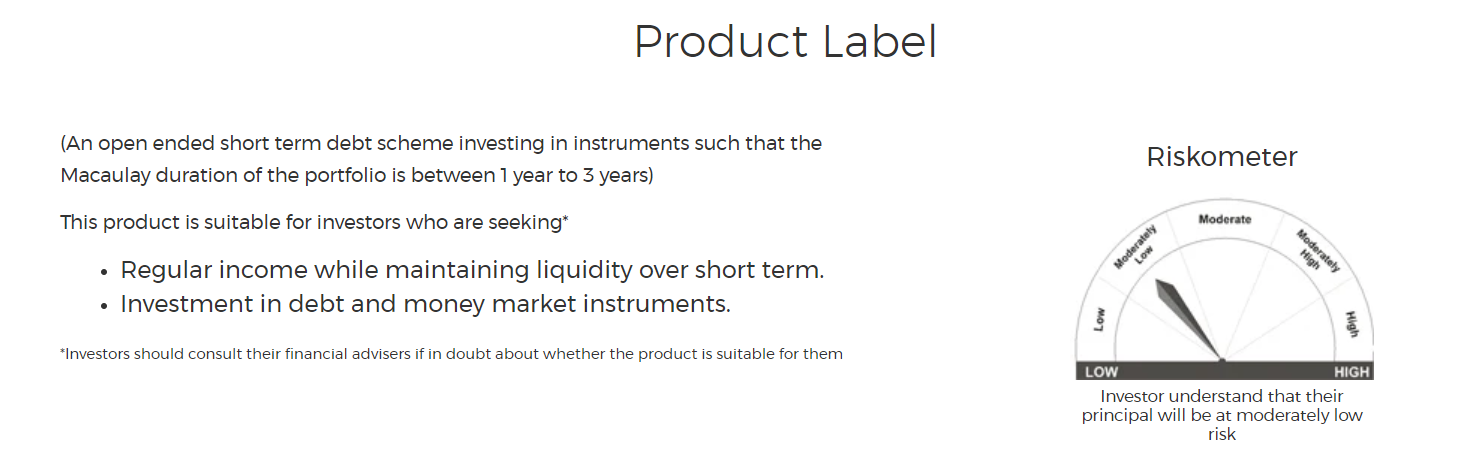
An open ended short duration debt scheme investing in instruments such that the Macaulay duration of the portfolio is between 1 year to 3 years
Mutual Fund Investments are subject to market risks, read all scheme related documents carefully.


Are you ready to plan and start your investment journey with Axis?



Download our app




Axis Bank Ltd. is not liable or responsible for any loss or shortfall resulting from the operation of the scheme.
Past performance may or may not be sustained in future. Please consult your financial advisor before investing.
Mutual fund investments are subject to market risks, read all scheme related documents carefully.
Copyright © 2020. All rights reserved Axis Mutual Fund.
Connect with us :


Privacy | Terms of Use | Disclaimer | Sitemap