
Axis Nifty Energy ETF


Why Invest in ETFs Funds?





Overview and liquidity information
Investment Objective
To provide returns before expenses that correspond to the performance of Nifty Energy TRI subject to tracking error. There is no assurance that the investment objective of the scheme will be achieved.
Entry Load, Exit Load & Tax
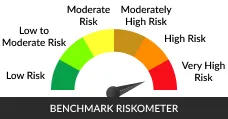
Underlying Index Details
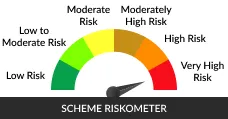
This product is suitable for investors who are seeking*
- To provide returns before expenses that correspond to the performance of Nifty Energy TRI subject to tracking error.
- There is no assurance that the investment objective of the scheme will be achieved.*
Investors can directly approach the AMC for redemption of units of ETFs, without any exit load, in case of the following scenarios:
Traded price (closing price) of the ETF units is at discount of more than 1% to the day-end NAV for 7 continuous trading days, or
No quotes for such ETFs are available on stock exchanges) for 3 consecutive trading days, or
Total bid size on the exchange is less than half of creation units size claily, averaged over a period of 7 consecutive trading days
In case of the above scenarios, applications received from investors for redemption upto 3.00p.m. on any trading day, shall be processed by the AMC at the closing NAV of the day.
Fund Manager


Fund Quants

Tracking Difference
| Fund Names | 1 Year | 3 Year | 5 Year | 10 Year | Since Inception |
|---|---|---|---|---|---|
| Axis Nifty Energy ETF | N/A | N/A | N/A | N/A | -0.48 |
Tracking Error
Disclaimer : Tracking Error and Tracking Difference data powered by ICRA Analytics (Disclaimer - https://www.icraanalytics.com/terms-of-use/disclaimer)
Portfolio

Asset Cap Mix
Portfolio Summary
Holdings
| Stocks | % of holdings |
|---|---|
| Coal India Limited | 10.18 |
| Reliance Industries Limited | 9.88 |
| Oil & Natural Gas Corporation Limited | 9.26 |
| NTPC Limited | 6.09 |
| GAIL (India) Limited | 4.86 |
Outlook


Documents
Presentation

Leaflet
SID
KIM
Frequently asked questions
Axis Nifty Energy ETF is an open-ended Exchange Traded Fund that aims to track the performance of the Nifty Energy TRI, subject to tracking error and tracking difference.
The ETF invests primarily in the constituents of the Nifty Energy Index in similar weightages to replicate the index's performance.
The scheme seeks to provide returns before expenses that correspond to the performance of the Nifty Energy TRI, subject to tracking error and tracking difference.
The index includes companies from the energy ecosystem such as Reliance Industries, ONGC, Coal India, NTPC, Power Grid, GAIL and other energy-related businesses.^
Investors can buy and sell ETF units on stock exchanges through a registered stockbroker during market hours.
Yes, ETF units are traded on stock exchanges and are held in demat form.
Yes, ETF units can be bought or sold on the stock exchange throughout trading hours like listed stocks
The market price may vary from NAV due to demand-supply dynamics and prevailing market conditions
The ETF provides diversified exposure to the energy sector through a single, index-based investment.
The ETF is subject to market risk, liquidity risk, tracking error risk, regulatory risk and sector-specific risks associated with energy companies.
Lower liquidity can affect trading volumes and may lead to ETF prices trading at a premium or discount to NAV.
It may be suitable for investors seeking long-term exposure to India's energy sector through a passive investment approach.
As an equity-oriented fund, long-term capital gains above ₹1.25 lakh are taxed at 12.5%, while short-term capital gains are taxed at 20%, subject to prevailing tax laws.*
The ETF may suit investors seeking diversified, long-term exposure to energy-related companies and who are comfortable with equity market risks.
The ETF is traded on stock exchanges, while an index fund is bought and redeemed directly with the mutual fund at applicable NAV
Investors seeking long-term participation in the energy sector may consider the ETF as part of their broader investment portfolio.
Yes, investors can buy ETF units through brokerage platforms that provide access to stock exchange trading.
An ETF trades on stock exchanges like a stock, whereas traditional mutual fund units are purchased or redeemed at NAV through the fund house.
Low trading volume may impact liquidity and can result in a wider difference between the ETF's market price and NAV.
Investors should consider the scheme's expense ratio, brokerage charges and applicable taxes before investing.