
 All Articles
 All Videos
 All Infographics


Know the Difference Between Large & Mid Cap Funds


When you think of investing, there are certain investment vehicles that come to our mind. But before making any investment, it is essential that we understand the basics of financial planning. The first thing for any to do is make a list of their short term goals and long term goals. Once you are able to prioritize your financial goals, then you might get a clear idea about how much and where to invest to achieve these goals. For example, if you have medium term goals like planning a foreign vacation, it may need you to save at least Rs. 3 lakhs to Rs. 5 lakhs, you may need to invest in a debt scheme and have an investment horizon of at least 4 to 5 years. On the other hand, if you have long term goals like buying a weekend home or building a retirement corpus, you might need at least 15 to 20 years in hand if you want to potentially achieve a corpus worth Rs. 25 lakhs to Rs. 30 lakhs. Long term investments in equity funds may be considered for such long term goals.
Mutual funds may prove to be beneficial for investors seeking long term capital gains, but people should know their risk appetite before they invest in these funds. That’s because mutual funds invest in equity among other money market instruments, making them a high volatile investment. Mutual funds collect money from investors sharing a common investment objective and invest this pool of funds across the Indian economy. It is believed that the performance of a mutual fund depends on the performance of its underlying assets and the sectors in which they invest.
Equity mutual funds are those funds that invest predominantly in equity and equity related instruments. Equity funds that invest predominantly in stocks of companies with large market capitalization are referred to as large cap funds. On the other hand, equity funds that invest in stocks heavily in stocks of companies with medium market capitalization are referred to as mid cap funds.
If you wish to find out more about large cap and mid cap funds, continue reading. But before you understand the meaning and differences between these two funds, it is essential that you understand what market capitalization means.
What is market capitalization?
Market capitalization is the value of a company that is traded on the stock exchange. Any company’s market capitalization is calculated by multiplying the ‘total number of shares’ by the ‘current share price’. Market capitalization can be further simplified using this simple formula. In the formula, it is generally referred to as market cap where ‘cap’ stands for capitalization.
Market cap of a company= Current market price of one share x Total number of outstanding shares
Large cap funds
As per SEBI’s circular dated 6th October, 2017 large funds are those funds that invest in top 100 companies with full market capitalization. As per SEBI’s norms, a large cap fund must invest 80 percent of its total assets in equity and equity related instruments of companies with large market capitalization. These companies are supposed to be reputable, trustworthy and well established market players. A lot of people consider investing in large cap funds safe, but this may or may not prove to be true in every circumstance.
Mid cap funds
Axis Mid Cap Fund is a type of fund that invest in companies with medium market capitalization. As per SEBI’s norms, mid cap funds must invest a minimum of 65 percent of its total assets in equity and equity related instruments of mid cap companies. They lie between large cap and small cap companies in terms of market capitalization. Funds that invest in such company stocks are referred to as mid cap funds. They are considered to be less volatile than small cap funds but more volatile than large cap funds (however, this may or may not prove to be true in every situation).
Market caps are defined as per SEBI regulations as below: a. Large Cap: 1 st -100th company in terms of full market capitalization. b. Mid Cap: 101st -250th company in terms of full market capitalization. c. Small Cap: 251st company onwards in terms of full market capitalization Asset allocation mentioned above is for normal circumstances.
Now that you know the major difference between large cap funds and mid cap funds, which fund are you planning on investing in? No matter where you invest, do remember that both the funds invest a major chunk of their assets in equity and equity related instruments, making them a high volatile investment. Hence, it is expected from investors to first understand their risk appetite and invest within their boundaries. Also, if you are someone who is completely new to mutual funds or investing in general and do not understand the basics of financial planning, you can always reach out to a financial advisor to help you understand how to invest and where to invest. Also, do some basic research like checking the fund’s past performance, whether the fund has a proven track record, its CRISIL ranking, asset allocation, risk profile, expense ratio, etc. before making the actual investment.
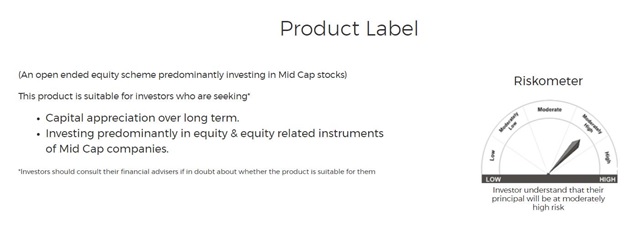
Axis Mid Cap Fund
An open ended equity scheme predominantly investing in Mid Cap stocks
Mutual Fund Investments are subject to market risks, read all scheme related documents carefully.


Are you ready to plan and start your investment journey with Axis?



Download our app




Axis Bank Ltd. is not liable or responsible for any loss or shortfall resulting from the operation of the scheme.
Past performance may or may not be sustained in future. Please consult your financial advisor before investing.
Mutual fund investments are subject to market risks, read all scheme related documents carefully.
Copyright © 2020. All rights reserved Axis Mutual Fund.
Connect with us :


Privacy | Terms of Use | Disclaimer | Sitemap