
Axis Nifty Energy Index Fund


Overview
Investment Objective
To provide returns before expenses that correspond to the performance of Nifty Energy TRI subject to tracking error/tracking difference. There is no assurance that the investment objective of the scheme will be achieved.
Entry Load, Exit Load & Tax
Minimum Investment Amount
Underlying Index Details
This product is suitable for investors who are seeking*
- To provide returns before expenses that correspond to the performance of Nifty Energy TRI subject to tracking error.
- There is no assurance that the investment objective of the scheme will be achieved.*
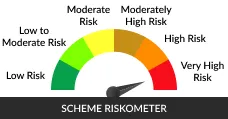
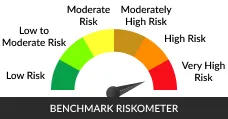
Fund Manager


Fund Quants

Tracking Difference
| Fund Names | 1 Year | 3 Year | 5 Year | 10 Year | Since Inception |
|---|---|---|---|---|---|
| Axis Nifty Energy Index Fund | N/A | N/A | N/A | N/A | -0.83 |
Tracking Error
Disclaimer : Tracking Error and Tracking Difference data powered by ICRA Analytics (Disclaimer - https://www.icraanalytics.com/terms-of-use/disclaimer)
Portfolio

Asset Cap Mix
Portfolio Summary
Holdings
| Stocks | % of holdings |
|---|---|
| Coal India Limited | 10.19 |
| Reliance Industries Limited | 9.89 |
| Oil & Natural Gas Corporation Limited | 9.27 |
| NTPC Limited | 6.1 |
| GAIL (India) Limited | 4.86 |
Similar Funds


Documents
Presentation

Leaflet
SID
KIM
One Pager
Frequently asked questions
It is an open-ended index fund that aims to track the Nifty Energy TRI by investing in the same stocks in similar proportions, subject to tracking error. It gives exposure to companies across oil & gas, power generation, coal, transmission and renewable energy and heavy electrical equipments etc.^
The Axis Nifty Energy Index Fund NFO (New Fund Offer) opens on 7th August 2026 and closes on 21st August 2026. Investors can participate in this energy sector index fund during the NFO period with a minimum investment of just ₹100, and in multiples of ₹1/- thereafter for both lumpsum and SIP (Systematic Investment Plan) options.
The Nifty Energy Index is an NSE index made up of companies across India's energy ecosystem -oil & gas, power generation, coal, transmission and renewable energy and heavy electrical equipments etc.^
No. It spans traditional energy businesses such as oil & gas, coal and power generation, alongside renewable-energy and transmission companies -giving exposure to both established and emerging parts of India's energy sector.^
Yes, more so than a diversified equity fund. Investing in a single sector means the fund's performance is closely tied to oil, gas, coal and power-sector cycles, and can be more volatile than a broad-market index fund.^
Sector funds are generally considered better suited to investors who already hold a diversified equity portfolio and want additional exposure to a specific theme, rather than as a first equity investment, given the concentration risk involved.
Yes. Investors can invest through a monthly SIP or as a lumpsum in Axis Nifty Energy Index Fund.
This is a passively managed index fund that follows a rules-based index rather than a fund manager's stock picks, and unlike an ETF, it can be bought or sold like any regular open-ended mutual fund without needing a trading/demat account.
Tracking error measures how much an index fund's returns deviate from its benchmark index (Nifty Energy TRI) due to fund expenses, cash holdings and rebalancing timing. Yes, it applies to the Axis Nifty Energy Index Fund - like all passive index funds, it aims to closely replicate the Nifty Energy TRI, and a lower tracking error means more accurate index replication.
Both track the same Nifty Energy TRI. The index fund is bought and redeemed at day-end NAV and supports SIPs; the ETF (exchange symbol ENERGYAXIS) trades on the exchange through the day and needs a demat account.
Rs 100 and in multiples of Re 1 thereafter, both during the NFO and on an ongoing basis. This keeps the fund accessible for first-time and small-ticket investors.
Top constituents include Coal India, Reliance Industries, ONGC, NTPC, GAIL, Power Grid, Suzlon, CG Power, GE Vernova T&D and BHEL. The top 10 account for roughly 60% of the index (as of 30-Jun-2026).^
No. Alongside refining and exploration, it carries meaningful weight in power generation, transmission, coal, gas distribution and heavy electrical equipment- including renewable energy players.^
NSE Indices reviews and reconstitutes the index periodically as per its published methodology, and the fund realigns its portfolio accordingly. Constituent weights shift at each review.
Roughly 72% large cap, 23% mid cap and 6% small cap. So it is large-cap led, but with a meaningful mid- and small-cap allocation.^
India's per capita energy consumption is roughly a third of the world average and a ninth of the US. As the country moves toward energy sufficiency, demand has a structural, multi-decade runway.
Demand is non-discretionary and compounding rather than purely cyclical. India is projected to add around 580 GW of generation capacity over the next decade -more than it has added in its entire history.
No. Renewables are already close to half of India's installed power capacity, and the index includes power, transmission and equipment makers that benefit directly from the clean-energy build-out.^
Oil is only one part of the index. Power utilities, transmission, gas distribution and electrical equipment have different demand drivers, which cushions the impact of any single fuel cycle.^
Manufacturing, electric vehicles, data centres, cooling demand and urbanisation. Over USD 50 billion of capex went into the power sector in 2024, with an estimated USD 1.3 trillion of clean-power investment needed to 2035.vi
Sector concentration, policy and regulatory change, commodity price swings and execution risk on large capex programmes. A single-sector index can fall far more sharply than a diversified index in a down cycle.
You can invest in Axis Nifty Energy Index Fund via Axis Mutual Fund Website or App.
Sectoral and thematic exposure is generally kept to a limited satellite portion of the equity portfolio, alongside a diversified core. The right number depends on your goals and risk profile-speak to your adviser.
A Nifty 50 or Nifty 500 Index fund spreads risk across all sectors; this fund deliberately concentrates in one. It can outperform meaningfully in the right cycle and underperform just as sharply in the wrong one.
Invest Now