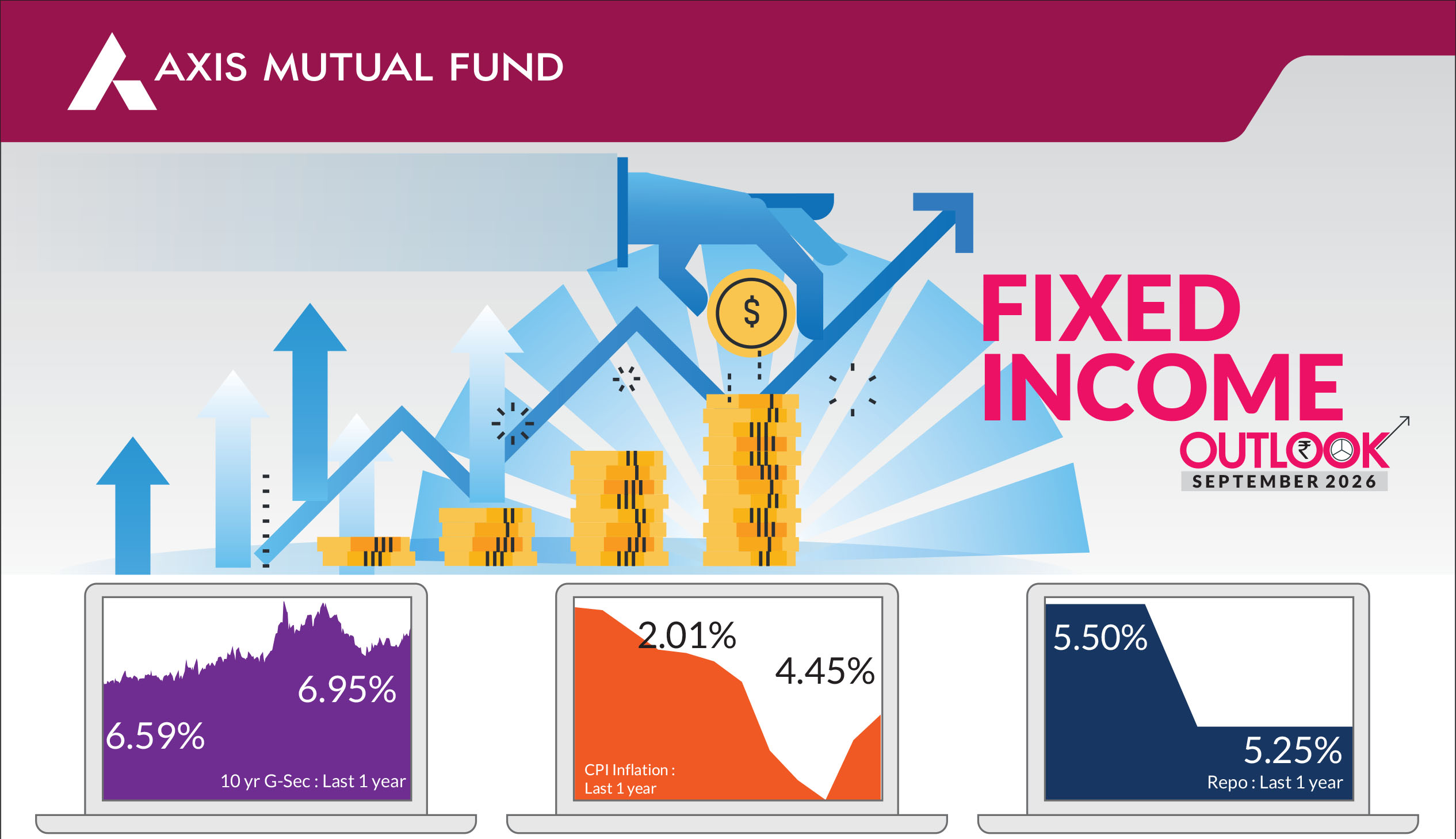




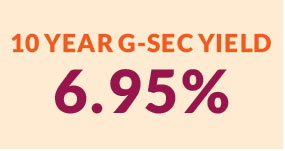
Indian government bonds remained volatile in August, with the benchmark 10-year G-sec yield
hardening from around 6.81% at the beginning of the month to about 6.95% by month-end. Bond
markets were influenced by a combination of rising crude oil prices amid geopolitical tensions in West
Asia, a pickup in domestic inflation expectations, and uncertainty around the global rate trajectory.
While the RBI's decision to keep the repo rate unchanged and maintain a comfortable liquidity
environment initially supported bonds, concerns over higher oil prices, inflation risks and the early
closure of the FCNR(B) swap window weighed on sentiment, leading to a rise in yields during the latter
half of the month.
Rupee sees a modest gain : The Rupee strengthened modestly against the US dollar in August, ending the month around 0.2% higher, supported by sustained RBI intervention and healthy foreign portfolio inflows. However, it underperformed several emerging market peers as rising crude oil prices and renewed geopolitical tensions weighed on sentiment. The US dollar strengthened towards the end of the month following hawkish commentary from the Federal Reserve, which led markets to reassess the path of US interest rates. Despite these external headwinds, robust capital inflows and strong foreign exchange inflows under the RBI's concessional deposit window helped keep the rupee resilient.
FCNR deposits garner strong inflows : The exceptional response to the RBI's FCNR(B) mobilisation scheme surprised markets, with deposits reaching US$127.2 bn and total inflows under FCNR(B), ECB and OFCB measures touching US$136.3 bn. The scale of these inflows not only strengthened India's external position and supported currency stability but also created a substantial liquidity surplus within the banking system. Given the strong participation, the RBI opted to close the scheme early on 31 August, ahead of the planned 30 September deadline, shifting the market's focus from inflow mobilisation to the central bank's liquidity management strategy.
GDP growth resilient despite geopolitical tensions : Real GDP growth surprised positively at 7.8% in 1QFY27, driven primarily by strong investments and exports. Gross fixed capital formation (investment) grew 11.9% while exports rose 12%, providing the key impetus to growth. On the supply side, services remained the largest contributor, led by financial, real estate and professional services growth of 12.1%, while manufacturing accelerated to 9.2% and construction remained healthy at 7.7%. Private consumption growth of 7.1% was supportive but not the key driver, while agriculture growth moderated to 3.6% due to weather-related disruptions. Nominal GDP growth came in at 10.3%, stronger than expected but still constrained by a low GDP deflator of 2.3%, reflecting subdued inflationary pressures.
Inflation largely stable in July : Headline inflation rose to 4.45% in July 2026, up from 4.38% in June, staying above the RBI's 4% medium-term target but remaining comfortably within the central bank's 2-6% tolerance band. The increase was largely driven by food inflation, which accelerated to 5.52%, reflecting higher vegetable prices. Meanwhile, underlying price pressures remained muted with core inflation at 4.16%. However, risks to the inflation outlook have increased from higher crude oil prices, weather-related disruptions to agricultural supply, and the possibility of food inflation remaining elevated for longer.
Bond yields rise globally : Bond markets came under pressure in the second half of August as a combination of hawkish central bank rhetoric and rising oil prices pushed global yields higher. The US 10-year Treasury yield climbed from a low of 4.62% to around 4.79%, driven by hawkish commentary from Fed Chair at Jackson Hole that strengthened expectations of a September rate hike, alongside a rebound in crude oil prices from US$85/bbl to around US$92/bbl amid renewed geopolitical tensions in West Asia. Rising inflation concerns and expectations of tighter monetary policy also weighed on European and Japanese bonds, with German 10-year yields rising to 3.36%, their highest level in 15 years, and Japanese 10-year yields approaching 3%, a multi-decade high, ahead of an expected rate hike by the Bank of Japan.
Market view
The strong response to the RBI's FCNR(B) mobilisation measures, led to the scheme being closed ahead of schedule after attracting substantial inflows. The resulting foreign currency inflows have significantly strengthened India's external buffers and created a sizeable liquidity surplus in the banking system. While this abundant liquidity remains supportive for money market rates, corporate bonds and carry strategies, the market's focus has now shifted from the pace of FCNR collections to the RBI's liquidity management response. Any measures to absorb excess liquidity through VRRR operations, FX swaps, OMOs or reserve requirements could influence the near-term trajectory of bond yields. On balance, FCNR-related inflows provide an important cushion against external shocks and help mitigate currency and funding risks, but elevated global yields and oil-related inflation concerns are likely to cap the scope for a meaningful rally in duration. Going forward, we remain focused on three key variables: the trajectory of US inflation and Fed policy expectations, the persistence of higher crude oil prices, and the RBI's approach to managing the FCNR-driven liquidity surplus. We continue to prefer the 3-5 year segment of the curve, particularly high-quality corporate bonds, while expecting the 10-year G-Sec yield to remain broadly range-bound in the near term.The US economy continues to exhibit resilience, supported by a strong labour market, healthy consumer spending and sustained investment activity. At the same time, inflation remains above the Federal Reserve's comfort zone and is expected to decline only gradually. This combination of resilient growth and persistent price pressures has prompted a reassessment of the Fed's policy trajectory, with markets increasingly pricing in the possibility of further rate hikes over the course of the year.
What should investors do?
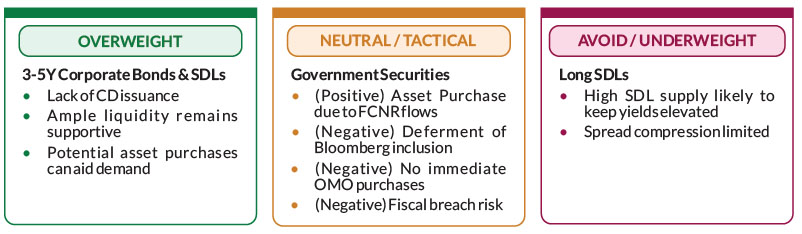
Overweight 3-5 year Corporate Bonds; cautious on Long Bonds
The fixed income opportunity remains attractive, but selectivity is key. We prefer the 3-5 year segment of the curve, particularly high-quality corporate bonds and select SDLs, where favourable carry, ample liquidity and limited CD issuance create an attractive risk-reward balance.
Government securities warrant a neutral stance. While FCNR related inflows could support demand, the deferment of Bloomberg index inclusion, absence of near-term OMO purchases, potential fiscal slippages and continued supply pressure may limit the scope for a meaningful rally.
Long-duration SDLs remain less compelling. Elevated state borrowing and a projected FY27 demandsupply gap are likely to keep yields high and restrict spread compression. Although index related inflows provide some support, risks from the 8th Pay Commission, weaker growth, softer tax collections and subsidy pressures suggest caution at the longer end of the curve.
Source: Axis MF Internal Research
Risks to our view: The risks to our view at this point are as below
1) The duration of the conflict
2) Crude oil prices above US$100 a barrel
3) Excessive currency depreciation
4) Hawkish Fed Policy
Strategy : With a conservative stance, short-duration, accrual-focused target-maturity strategies are particularly well positioned in the current macro environment. Higher yields, combined with supportive liquidity conditions, enhance the potential for better risk-adjusted returns and predictability when held to maturity.
Source: Bloomberg, Axis MF Research.
